I was eleven, home sick from school, and bored out of my tiny mind. Daytime TV was giving nothing, so when I scrolled through channels and saw Jurnee Smollett’s face, I thought, “Oh hey, I know her from Full House!” And Meagan Good? That girl from Cousin Skeeter! Clearly, this was going to be some cute family drama, right?
Reader, it was not cute.
By the time the credits rolled, I had aged two decades, developed trust issues, and learned that Southern Gothic storytelling hits different. This movie did not gently ease me into trauma – it grabbed me by my braids and threw me into the deep end of repressed memories, generational curses, and the fragility of childhood innocence. I was just trying to recover from a cold, not unpack the entire spectrum of human morality.
The Premise (Or, This Ain’t A Disney Movie, Girl)
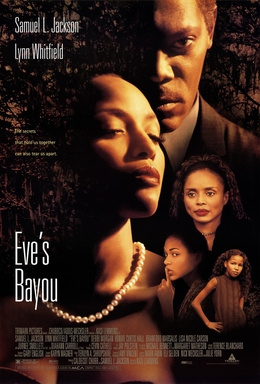
So Eve’s Bayou is this haunting, beautifully shot 1997 film directed by Kasi Lemmons (a queen). It’s part coming-of-age story, part Southern Gothic fever dream, and part “what the hell did I just watch?”
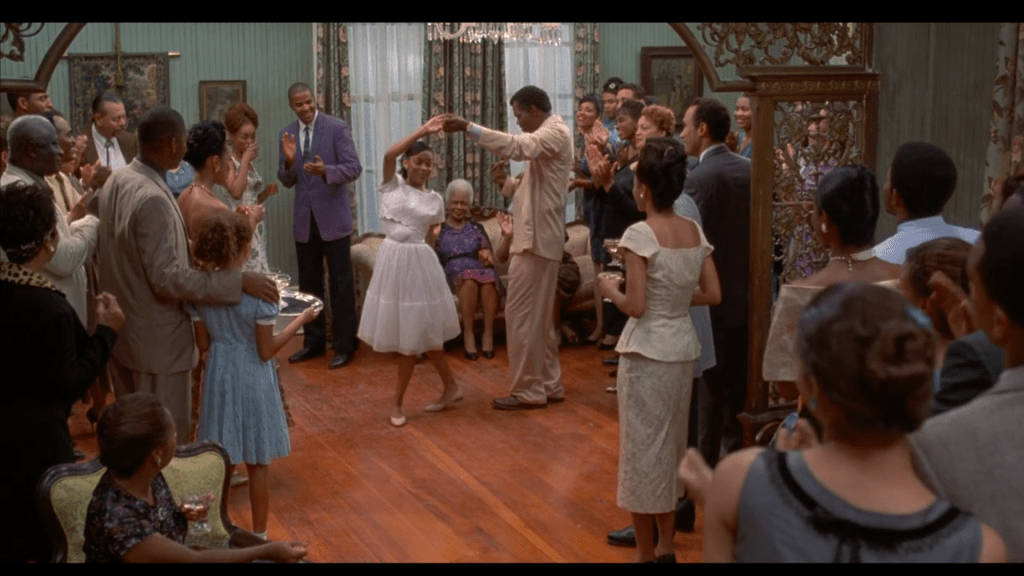
We meet little Eve Batiste (played by Jurnee Smollett, who was criminally good in this role), growing up in Louisiana in the 1960s in this wealthy, upper-class Creole family. I remember being shook seeing a Black family portrayed like that in a period piece – big house, nice clothes, dinner parties, fancy cars. My brain, which had been fed on a steady diet of “if it’s a Black movie, it’s about prejudice, slavery, or drugs,” short-circuited. Like — wait, we can have moody lighting, tragic secrets, and old money too??
Eve’s father, Louis Batiste (Samuel L. Jackson) is a charming doctor, the kind who can literally save your life and ruin it in the same hour. Her mother, Roz (played by the stunning Lynn Whitfield who might play crazy but never plays broke) is this graceful, repressed Southern matriarch who’s clearly one argument away from snapping. Their house has the exact energy of “something’s wrong, but we’re too well-dressed to talk about it.”
Eve’s older sister, Cisely (Meagan Good), is in that delicate teenage phase where you think you understand the world but are actually standing on the edge of emotional chaos. Then there’s Mozelle (Debbi Morgan), the clairvoyant aunt who’s lost three husbands and still manages to look like a jazz-era goddess. Every time she walked into a scene, the atmosphere went full mystical – candles, silk, emotional devastation.
Anyway, without giving away every twist (though if you’ve seen it, you know exactly what I’m talking about), the movie dives headfirst into family secrets, betrayal, grief, and the blurred line between what’s seen, what’s remembered, and what’s imagined after Eve witnesses something she’s not supposed to thus setting off a chain reaction. It’s dark, poetic, and horrifyingly adult for an eleven year old who thought she was getting something that would be like a Disney Channel Original Movie.
Performances: The Holy Trinity of Emotional Devastation
Let’s talk about the acting. Because, oh my God – these performances were not just acting, they were hauntings.
Debbie Morgan (Mozelle Batiste Delacroix)
This woman – no, this goddess – was acting on a plane of existence most of us can’t reach. Mozelle’s every line, every sigh, every head tilt was dripping with old-soul heartbreak. And that monologue about her second husband’s death? Cinematic perfection. Eleven year old me didn’t understand the heartbreak, but damn if I didn’t feel it.
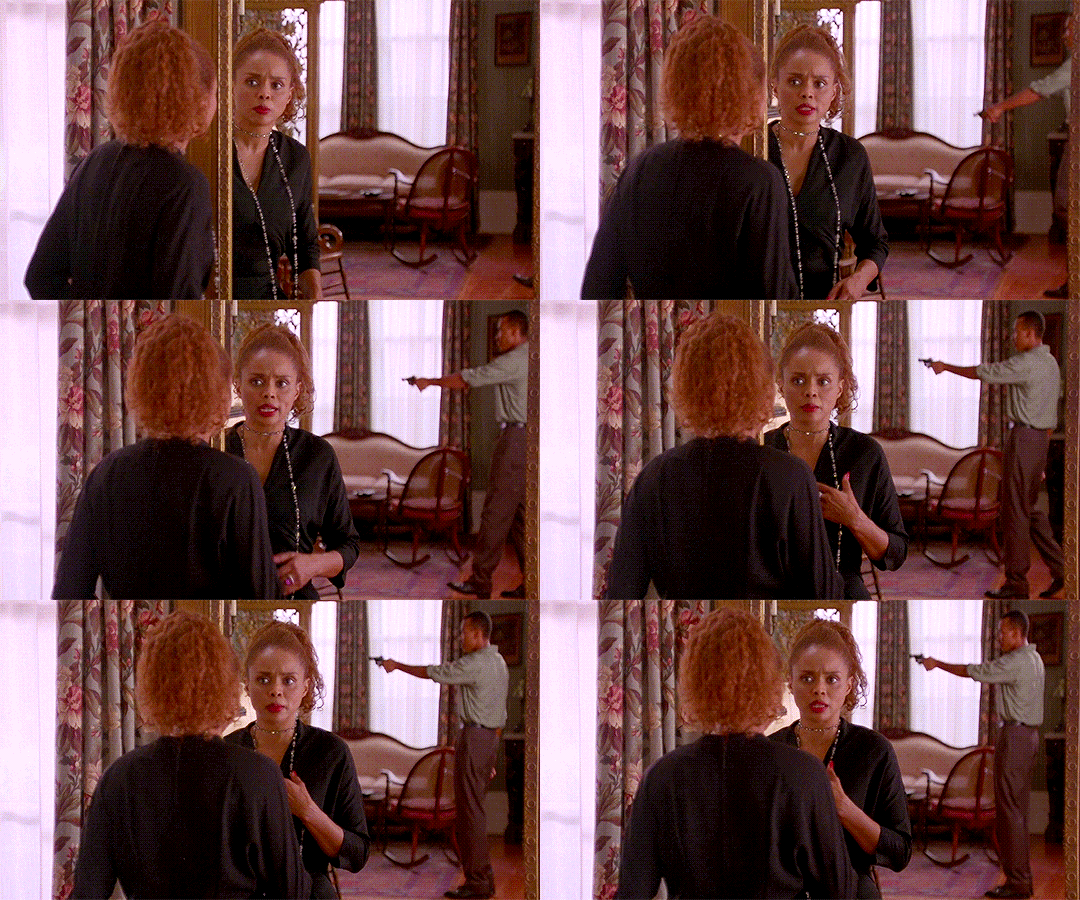
The scene is framed like a ghost story. Her voice is low, trembling, confessional. She talks about her affair and the way tragedy follows her like perfume, and you can feel every ounce of grief and guilt clinging to her skin. And then – THAT MIRROR SHOT. Debbie Morgan walking into her own reflection, perfectly composed but shattered inside? Literal chills. That scene lives rent-free in my head to this day. I’ve watched entire Oscar-nominated films with less emotional texture than that single scene. Kasi Lemmons directed the hell out of it.
Jurnee Smollett (Eve Batiste)
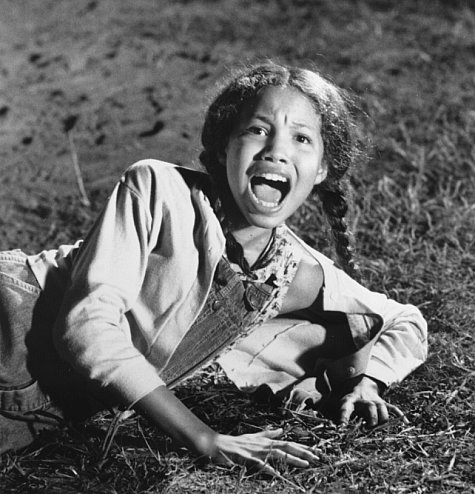
Jurnee Smollett as Eve Batiste was a revelation. That girl was, what, ten? And she was out here serving layered emotion and gravitas like she’d already seen some things.
Eve is curious, sensitive, and fierce – she’s the moral compass of the story, but also the one who can’t escape the weight of what she learns. Every expression, every pause, every tear feels earned. Jurnee doesn’t just play Eve; she embodies her. Watching her performance now, you realize how rare it is to see a child actor command a film with that much quiet power.
Meagan Good (Cisely Batiste)

And finally, Meagan Good as Cisely. MY GOD. I don’t know what the Academy was doing in 1997 but they should have cleared out a category for this girl.
Meagan Good in this movie is the moment. I know people love to praise Jurnee (rightfully so), but Meagan was the emotional hurricane. Cisely is easily one of the most complex teen characters I’ve ever seen on screen. The way she played that mix of teen arrogance, confusion, longing, and misplaced loyalty was terrifyingly real. You can feel her desperation to be seen and the heartbreak when the adults around her fail her completely.
That scene – you know the one – where everything unravels? I remember sitting there like, what is happening, why is my chest tight, and who is supposed to be watching me?? It’s one of the most misunderstood scenes in film history. The nuance she brought to that moment – phenomenal.
And as an adult rewatching, her performance hits even harder. You see how much of her silence is actually survival. How her character embodies the blurred lines between perception and truth, girlhood and womanhood. She carried the emotional weight of the entire film, and we need to start saying that louder.
Memory vs. Truth
Eve’s Bayou treats memory like a living, breathing thing. Adult Eve narrates the story like someone trying to piece together a dream. As a kid, I thought the movie was about a little girl seeing too much. As an adult, I realize it’s about how seeing too much can distort everything you thought you knew…especially when you’re trying to bury it.
Memory protects us when we need it to, but it also betrays us. That’s the genius of this movie: it’s doesn’t give us a clear truth because there isn’t one. Everyone’s truth is shaped differently and that’s so real.

Like, have you ever replayed a memory from childhood and realized the grown-ups weren’t actually okay? That moment when nostalgia cracks open and you see the dysfunction underneath? That’s Eve’s Bayou. It captures how children internalize that adult dysfunction and turn it into stories to survive. And isn’t that the most adult thing? Half of adulthood is realizing that every bad memory you’ve ever had is unreliable but still deeply, painfully true to you.
Messy Black Girlhood: A Beautiful Emotional Dumpster Fire
One thing Eve’s Bayou does that still hits me in the chest is how it treats Black girlhood – not as a neat, polished coming-of-age montage, but as a sacred mess.
Eve and Cisely are both just…feeling everything. Rage, jealousy, grief, resentment – it’s all bubbling under their skin, and the adults around them keep saying “hush” or “you imagined that.” And that’s the thing – Black girlhood is usually always policed before it’s protected.
This movie said, “What if we show that? What if we show Black girls learning too much too soon, and instead of moralizing it, we just…sit in the discomfort?”
Watching this as an adult, I wanted to cry, because I was Eve – too observant, too emotional, always getting in trouble for “talking back” when I was really just stating facts. I was also Cisely – trying to grow up and find myself before I even understood what growing up meant.
The film does not simplify these girls. They are complex, contradictory, and extremely flawed. They love and resent their family in the same breath. They misremember things because they’re children trying to make sense of adult sins.
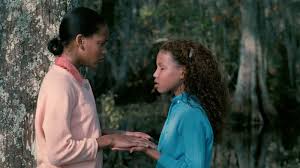
My Final Thoughts
Eve’s Bayou is a masterclass. Not just in Black cinema, but in cinema, period. It’s the kind of movie that grabs your brain, wrings it out like a washcloth, and whispers, “You’ll thank me later.” And I did. Eventually. After years of emotional recovery.
Should I have watched it as a child? Absolutely TF not. Eleven year old me was not equipped. I should have been watching The Parent Trap or Rugrats in Paris, not unraveling generational trauma in the Deep South.
Am I grateful that I did? Every damn day.
Because Eve’s Bayou shaped me into someone who finds beauty in the broken and poetry in pain. It didn’t just entertain me – it rewired me. It gave me a lifelong love for stories drenched in atmosphere, mystery, and humanity.
So yeah – this film traumatized me young, but it also awakened my inner Southern Gothic baddie. And I think that’s a fair trade.
Next up on films I had no business watching as a kid? Probably The Color Purple I have a whole dissertation about that one…
 Stories, Sips, and Shenanigans
Leave a comment