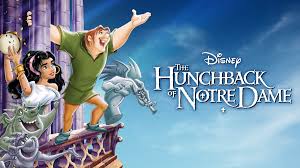
The Hunchback of Notre Dame (1996) is probably the most bold, emotionally scarring, spiritually charged kids’ movie of all time. I can’t believe Disney looked at Victor Hugo’s depressing gothic novel and said, “Yeah, this’ll sell Happy Meals.”
And yes, I did get the Happy Meal. It had an Esmeralda toy and Esmeralda was my Elsa before Elsa even thought about singing “Let It Go”. I wanted to be her so badly I danced with a scarf dramatically to my Disney cassette player like I was leading a Parisian rebellion.
The Plot (or: “So We’re Just Doing Trauma Before Naptime? Cool.”)
For those who need a refresher:
Quasimodo, the lonely bell ringer of Notre Dame, has been isolated his whole life by his adoptive father/abuser, Judge Claude Frollo – aka the most terrifying Disney villain ever animated. Quasimodo dreams of leaving his tower, of being out there among people who would probably mock or fear him for his appearance.
When he finally sneaks out during the Festival of Fools, he meets Esmeralda – the first person who treats him with real kindness. Meanwhile, Frollo spirals into an unholy obsession with her, blaming her for his own twisted desires. Phoebus, the dashing himbo soldier with a moral compass, joins the chaos, and the three of them get caught in a storm of corruption, faith, and fire…literally.
This was Disney in its villain era, baby. I remember sitting there as a child like, “Why is this man singing about hell? Why is Paris on fire? Where’s the talking animals?!”
How Dark This Movie Actually Is
Let’s be clear: The Hunchback of Notre Dame is dark as hell. And to prove it, here’s an incomplete list of things that should’ve sent this movie straight into PG-13 territory:
- Opening Scene: Frollo MURDERS a woman on the cathedral steps and almost drowns a baby in a well. Disney said “Let’s traumatize the kids before the title card.”
- Frollo’s “parenting” style: Psychological abuse, gaslighting, manipulation – it’s basically Tangled if Mother Gothel was a zealot with a law degree.
- “Hellfire”: A song about lust, damnation, and self-loathing where Frollo literally sings to the Virgin Mary about wanting to burn a woman alive because he can’t handle being horny. I repeat: this was a Disney villain song.
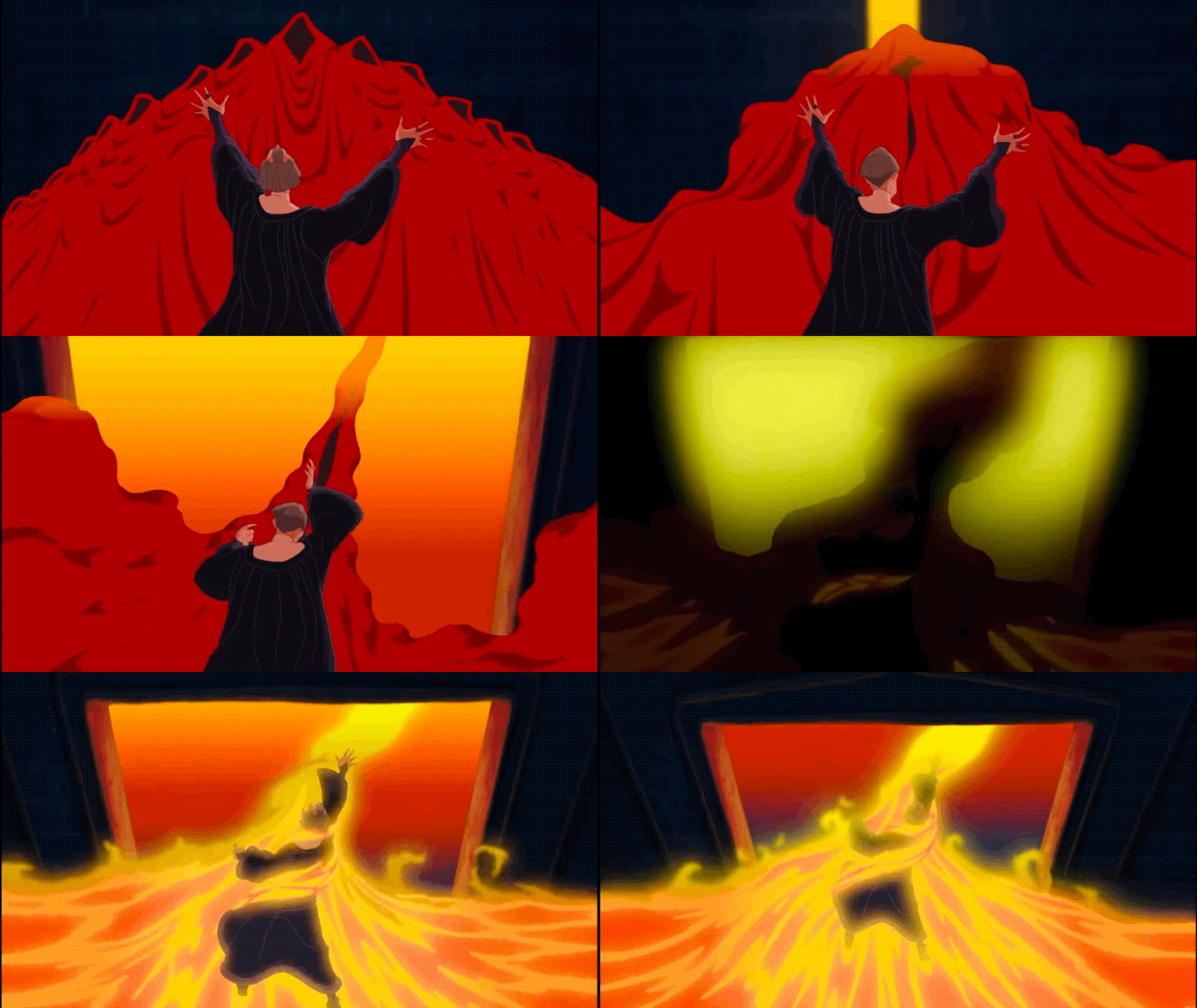
- The word “damnation” appears multiple times. This is a G-rated film.
- Genocide subplot. Frollo literally orders the extermination of an entire group of people.
- The hero doesn’t get the girl. Which…ouch. We were not prepared for that realism. Quasi’s dream of love shatters before his eyes, but instead of turning bitter, he lets her go with his blessing.
- Public humiliation, torture threats, and attempted burning at the stake.
And yet, Disney wrapped all of that in stunning animation and soaring music so you didn’t realize you were watching emotional despair with a side of divine judgment.
The Soundtrack That Deserved Both A Grammy and an Exorcism
Say what you will about the trauma, but this soundtrack goes feral. Alan Menken and Stephen Schwartz cooked up something truly amazing.
- “The Bells of Notre Dame” – The opening number SLAPS. It’s operatic, foreboding, and that high note Paul Kandel hits as Clopin? Astronomical. Astral projection achieved. I swear my soul leaves my body every time.
- “Out There” – Quasimodo’s hopeful yet devastating anthem. It’s one of Disney’s most emotional “I want” songs – hopeful on the surface, heartbreaking underneath. It’s “Part of Your World” for people with chronic self-worth issues.
- “God Help the Outcasts” – Esmeralda praying for others while surrounded by people praying for wealth and fame for themselves? Disney really said, “let’s humble humanity real quick.”
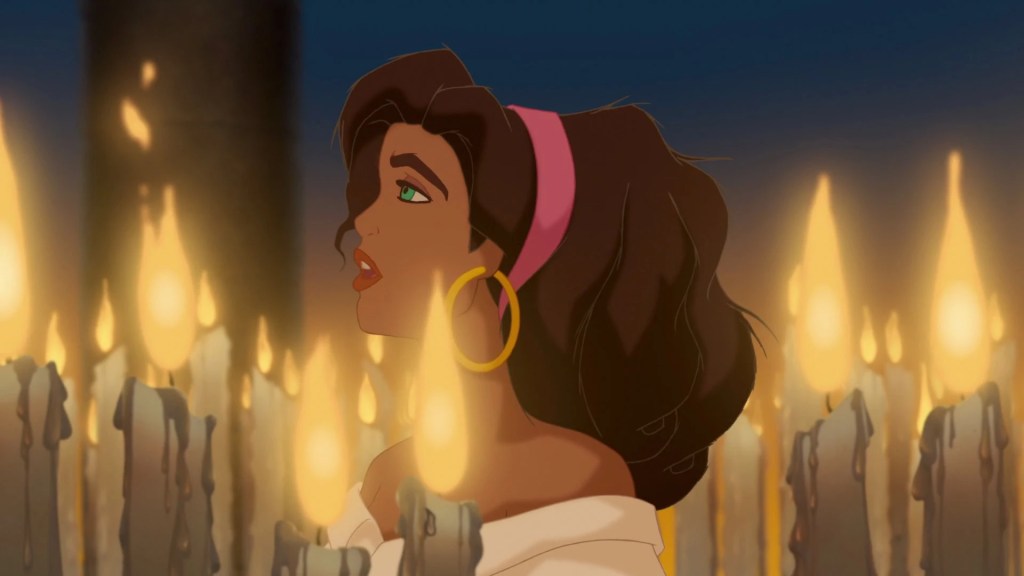
- “Heaven’s Light/Hellfire” – The emotional whiplash of this back-to-back sequence is unmatched. Quasimodo sings about innocent love; Frollo sings about sinful obsession. It’s the most intense moment and juxtaposition in the entire Disney renaissance. This was my first brush with Catholic guilt and I’m not even Catholic.
Honestly, Hunchback might have the most mature soundtrack of any Disney movie. The music doesn’t just fill time – it exposes the characters’ souls.
Why This Movie Still Resonates Nearly 30 Years Later
Because the world still looks a lot like the one this movie critiques. The prejudice, the control of institutions, and the way society defines who “belongs” – it’s painfully familiar.
We’re still asking the same questions:
- Who gets to be seen as human?
- Who decides what’s moral?
- How do we live with compassion in a world built on fear?
And The Hunchback of Notre Dame gives us an answer that still feels radical: choose empathy, even when the world tells you not to.
Quasimodo doesn’t get the girl, but he gets something more powerful – self-acceptance and community. He learns that he was never the monster Frollo said he was. The real monsters are those who refuse to see others’ humanity.
Final Toast
This movie is art. It’s bold, tragic, sensual, spiritual, and stunningly relevant. It’s the Disney film that dared to talk about sin and damnation in the same breath as hope and love. As an adult with a glass of wine in hand and a little life experience, I can say this movie is a masterpiece that was way ahead of its time.
The Hunchback of Notre Dame didn’t just ring the bells – it rang the alarm. And decades later, we’re still feeling the echoes.
Now excuse me while I go dramatically stare out a window and sing, “Out there, living in the sun…” like the emotionally over-invested Disney adult I am.
Also, Esmeralda is still that girl.
 Stories, Sips, and Shenanigans
Leave a comment