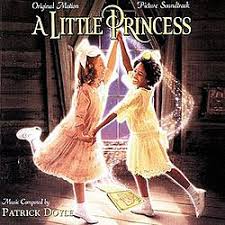
You ever rewatch a childhood favorite and realize it emotionally wrecks you on a whole new level as an adult? Yeah. That was me with A Little Princess. I went in thinking, “Oh, it’s that sweet movie I loved as a kid,” and came out sobbing like I’d just gone through emotional boot camp. Somewhere between the snow dance scene and the line “All girls are princesses…”, I was full-on ugly crying.
This movie holds up beautifully. It’s whimsical, heartbreaking, empowering, and visually gorgeous – like every frame looks painted in soft gold and emerald green. Alfonso Cuarón directed it, and you can tell even then (before Harry Potter and the Prisoner of Azkaban and Roma) that he had an eye for turning light, shadow, and color into pure emotion. The atmosphere feels like a dream – bittersweet, cozy, and quietly magical.
The Story: Hope In a Cold, Cruel World
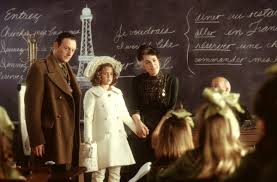
Set in 1914 New York, the story follows Sara Crewe (Liesel Matthews), a kind, imaginative girl whose life takes a turn from fairy-tale luxury to devastating hardship. One day she’s attending an elite boarding school with trunks full of dresses and trinkets; the next, tragedy strikes and she’s left penniless under the tyranny of Miss Minchin, the world’s most miserable school headmistress.
Miss Minchin (Eleanor Bron) is the original “you need therapy, ma’am” villain. Her brand of cruelty isn’t cartoonish – it’s cold, calculated, and actually painfully human. She hates joy and imagination because it’s obvious she’s never experienced them. Maybe if someone hugged you as a child, you wouldn’t be out here traumatizing children, ma’am…
So yes, it is, was, and forever will be f*** Miss Minchin. No redemption arc, no sympathy (well, okay, maybe a crumb of pity), but mostly rage.
Sara Crewe: The Patron Saint of Emotional Resilience

Sara is the embodiment of grace under fire – a literal beacon of warmth in a world determined to freeze her out. Her optimism doesn’t come from ignorance; it comes from choice. Even as she’s stripped of everything, she refuses to stop believing in magic, kindness, and the worth of her own soul.
Her connection to stories, especially the Ramayana, adds so much depth. As an adult, I realized she’s using her storytelling as a coping mechanism – she tells this epic story to make sense of her own suffering. When she sees herself in Sita, banished but faithful, she’s finding a language for resilience. It’s powerful.
Sara’s imagination isn’t just whimsy – it’s rebellion. In a world that tries to break her spirit, she insists that every girl is still a princess. That’s not her saying it to be vain, but to survive.
Becky: The Heartbeat of the Story
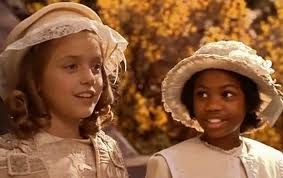
Let’s talk about Becky (Vanessa Lee Chester) because this girl deserves all the flowers. In 1914 New York, a Black girl cast as the best friend and equal to a rich White main character was revolutionary, especially in a children’s film. Becky isn’t a sidekick or a caricature; she’s brave, loyal, and a real ride-or-die. She and Sara lift each other up, literally and emotionally.
Their friendship feels like sisterhood forged in shared pain and hope. When they’re laughing together in the attic after being treated like servants, it’s pure magic. The representation here is so important – Becky’s character is proof that kindness, courage, and imagination don’t belong to privilege alone.
The Cinematography: A Dream You Can Feel
Every frame of this movie looks like a painting. The lighting? Ethereal. The costumes? Peak Edwardian. The color palette? Warm golds and greens for moments of magic, washed-out grays and blues for despair. It’s visual storytelling perfection.
The “Kindle my heart” snow dance sequence? Straight up one of the most beautiful moments ever filmed. As an adult, I cried like my inner child was finally getting the hug she needed. The snow falls softly through the attic while Sara just twirls with joy on her face despite everything she’s been through, and the music swells like hope itself is reclaiming space.
It’s the kind of movie scene that makes you believe in miracles again – or at least in the healing power of a good ugly cry.
The Message: “All Girls Are Princesses”
This line will never, ever stop wrecking me. When Sara says, “All girls are princesses. Even if they live in tiny old attics, even if they dress in rags…”
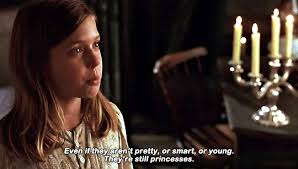
It’s a manifesto of self-worth. It’s a love letter to every girl who’s ever been overlooked, underestimated, or made to feel small.
And yes, even Miss Minchin deserves a tiny sliver of pity here as after she tells Sara off for still believing, she stands in the hallway and just sobs. She’s a cautionary tale – proof of what happens when you’re denied love and refuse to believe in others’ goodness. She’s what happens when the inner child never heals.
Final Thoughts
A Little Princess is more than just a children’s movie – it’s an ode to resilience, empathy, kindness, magic, and imagination. It reminds you that grace isn’t about crowns or castles; it’s about holding onto light in the dark. It’s about finding family in the unlikeliest places. It’s about never letting the world convince you that kindness is weakness.
Watching it again as an adult feels like rediscovering the child in you who still believes in wonder, goodness, and the magic of “what if.”
So yeah….I cried. A lot. But I feel like I also healed something in the process.
And, Reader, if no one’s told you lately –
You are a princess.
Doesn’t matter your age or race or what your bank account looks like. Even if life’s messy, even if your crown’s a little crooked, even if life has stuffed you into a metaphorical (or literal) attic. You are worthy of love, softness, and light. You are royalty.
Now, excuse me while I continue to cry into a pillow again and extend my suffering with The Secret Garden. Might as well…
 Stories, Sips, and Shenanigans
Leave a comment