Okay, bookish besties.
This is one of those books where I finished it, closed it, stared at the wall for a minute, “Well…that was certainly beautiful.”
Did I like it? Yes.
Did I love it? Not quite.
Let’s unpack.
🌎 WHAT IT’S ABOUT
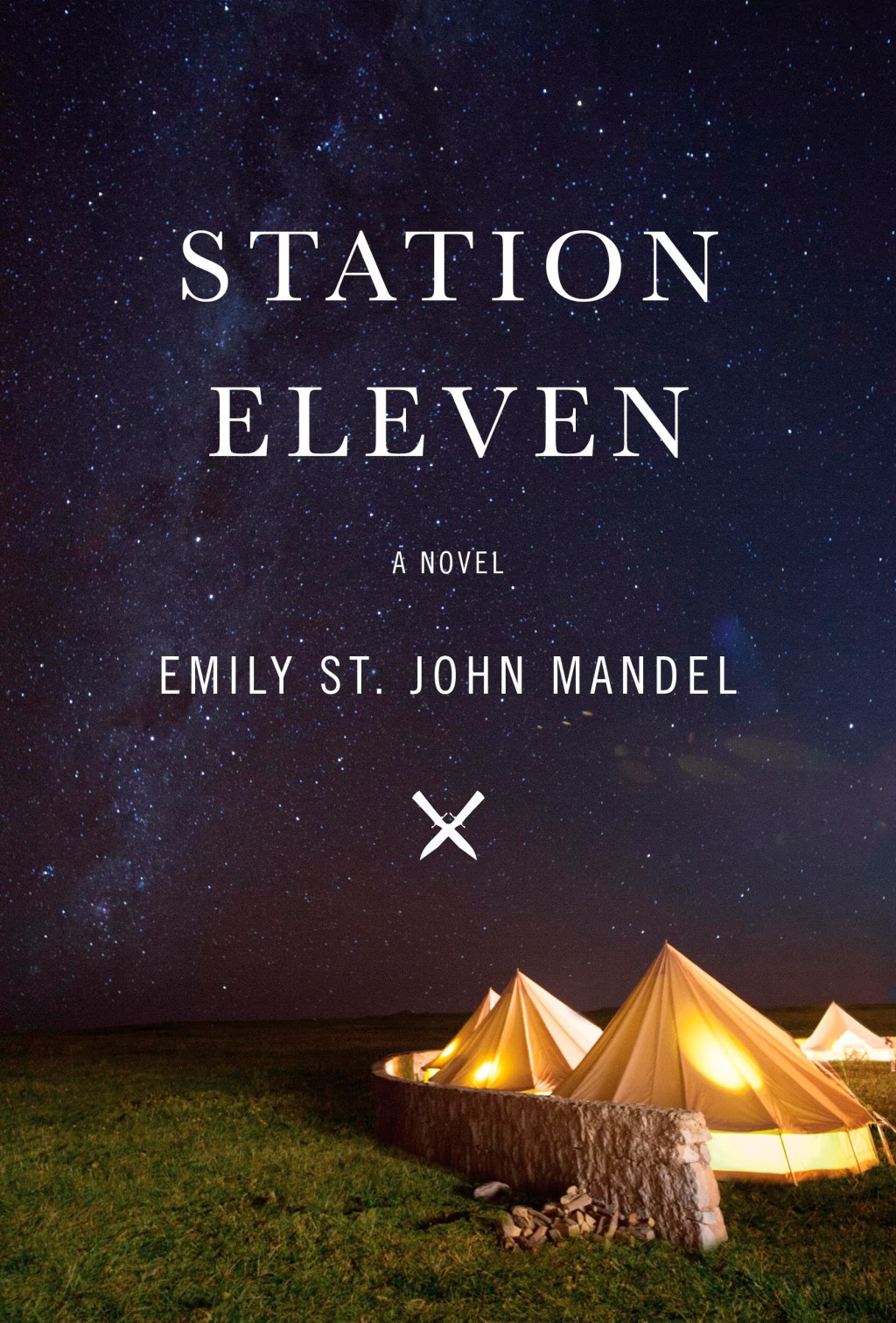
This novel jumps back and forth between the lives of a famous actor, his ex-wives, and a handful of people loosely connected to him before, during, and after a flu pandemic wipes out 99% of the world’s population.
Yes. Ninety-nine percent.
And this book was published in 2014.
Before COVID.
Which is…unsettling.
The Georgia Flu spreads at terrifying speed. People get sick and die within hours. Hospitals collapse. Electricity fails. Planes become massive tombs. The internet disappears. Civilization just…stops.
The novel jumps between:
- the actor’s life before the pandemic
- the chaotic early days of collapse
- and a traveling Shakespeare troupe twenty years later, performing in the ruins of the old world.
There’s also a cult leader, missing people, abandoned towns, and a quiet thread of hope weaving through it all.
Station Eleven is part character study, part post-apocalyptic meditation, part interconnected-web-of-fate story.
And it feels like it’s trying to be all three at once…which only worked sometimes.
WHAT I LIKED
The Writing
The prose is genuinely gorgeous.
Soft. Reflective. Atmospheric. Could devastate you with a single line.
Even when describing the end of civilization as we know it, the tone stays restrained and elegant.
I did a lot of highlighting in this one.
The World After the Flu
The post-pandemic world-building was one of my favorite parts of the novel.
Twenty years later, society looks like:
- settlements in old parking lots
- horses instead of cars because gasoline has gone stale
- traveling caravans performing Shakespeare
- museums dedicated to obsolete objects like cell phones, motorcycles, and Nintendos
- highways swallowed by trees
It’s not explosive apocalypse chaos or zombie terror. It’s just quiet survival. Stillness.
And that stillness is terrifying.
(Also, imagine reading this with a sinus infection. The paranoia levels were unmatched. I was side-eyeing myself every time I sneezed…)
Miranda and Kirsten
Kirsten was easily my favorite character. Knife-throwing, fiercely competent queen. I loved her feral survival energy paired with her devotion to art.
I liked Miranda too. She was quietly strong, creative, and emotionally layered. She spends most of the book working on her graphic novel series, a passion project of hers that no one else understands. As a writer, I can relate. I could have read an entire novel based on just Miranda’s character.
The Middle of the Book
The middle section – when tension ramps up and things get sinister – was by far the most gripping part.
The pacing tightened. The stakes felt immediate.
There was momentum…until there wasn’t.
WHAT I HAD ISSUES WITH
Arthur vs. Apocalype
At times, the book felt split between two different novels:
- a character study about a famous actor and the people he affected
- a post-apocalyptic survival story about art and civilization.
Both ideas are interesting. They just didn’t fully fuse for me.
Sometimes I wanted more pandemic survival. Sometimes I wanted less Hollywood flashbacks. It was like the book couldn’t decide its primary focus.
The Cult Plotline
There’s a cult storyline that builds real tension.
People disappear. Someone escapes. The danger feels close.
And then nothing really happens with it.
I’m not saying I needed explosions or a dramatic showdown, but I did want a stronger sense of narrative payoff after all that buildup.
Also I wanted to know how the Prophet actually became the Prophet? I wanted more context, but there was none.
Miranda’s Arc
Miranda (again) was one of the most compelling characters – and I felt like her story ended too soon.
I understand the thematic choice. I do.
But I wanted more from her.
Pacing Imbalance
The beginning was eerie. Loved it. Great.
The middle is tense and fast-paced. Favorite part of the book.
The ending is…underwhelming.
The final stretch felt so anticlimactic compared to the momentum the middle had built.
FINAL THOUGHTS
At the end of the day, Station Eleven is a beautifully written, thoughtful novel about:
- the fragility of civilization
- the persistence of art
- memory and identity
- the strange web of human connection
I admired it.
I respected it.
I just didn’t fully love it.
3 stars from me. The book had gorgeous prose and interesting characters/world-building, but uneven emotional payoff.
By the way, if you’re even slightly congested while reading this? Good luck sleeping.
And now to watch the show…
 Stories, Sips, and Shenanigans
Leave a comment