So, bookish besties…
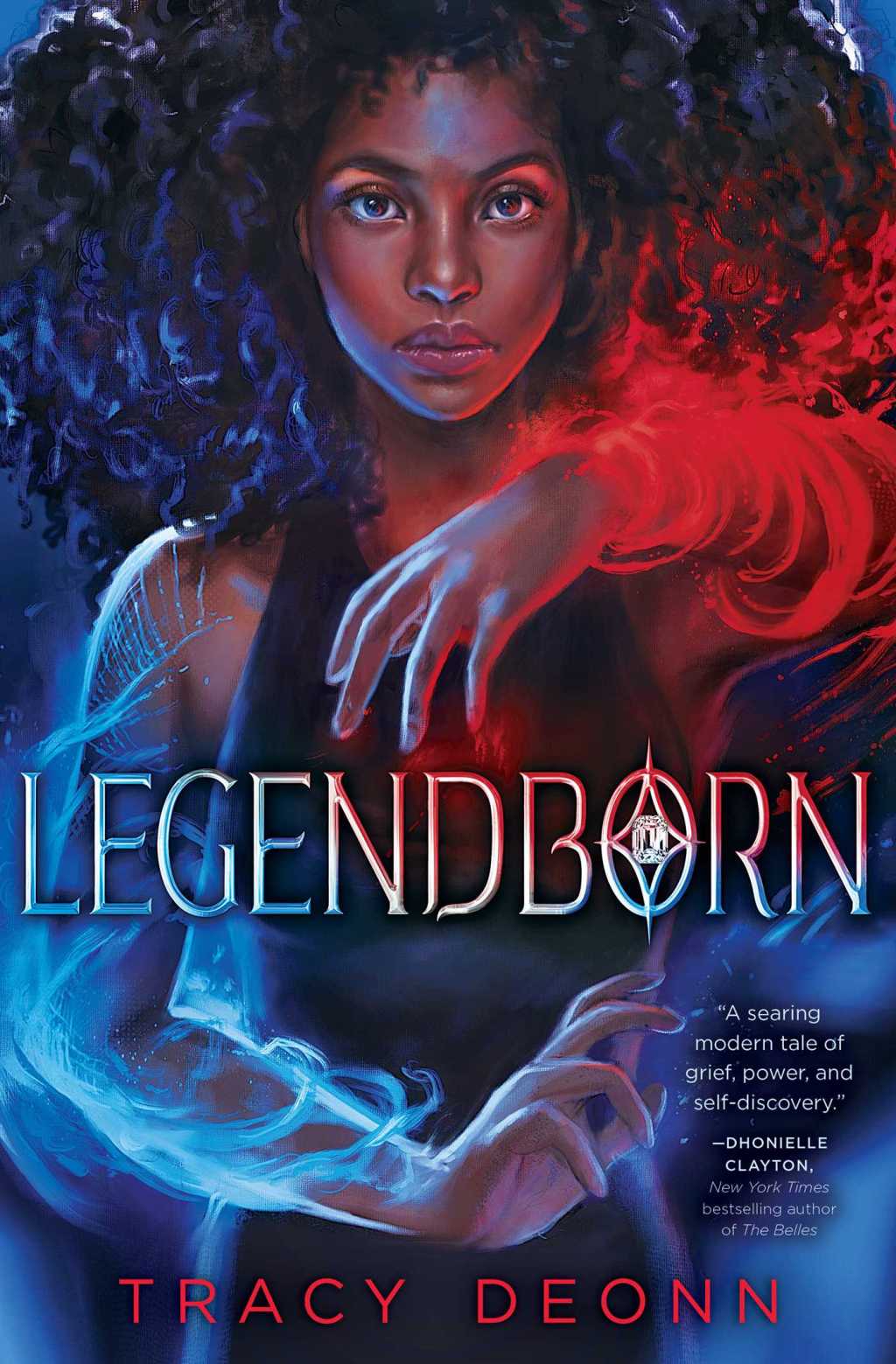
I literally just finished reading Legendborn like an hour ago and immediately had to talk about it, so forgive me if this review becomes me just rambling. I apologize in advance.
I went into this book expecting Arthurian mythology, secret societies, romance, magic, and maybe a brooding boy or two.
Yup, I got all that.
I also got grief, Black history, racism, generational trauma, complicated friendships, themes about belonging and identity, demons, ancestral magic, institutional corruption, approximately 74 conspiracy theories, and 50 pages of notes I took while reading.
Somewhere along the way, Legendborn became one of my top ten favorite books of all time.
Let’s get into why.
The Plot
Sixteen-year-old Bree Matthews arrives at UNC-Chapel Hill’s Early College program carrying an enormous amount of grief. Her mother recently died in a car accident, and Bree is desperate for something that feels different from the life she had before. She wants distance from home, from her father’s grief, from everyone treating her like The Girl Whose Mom Died, and maybe from the version of herself who existed before the accident.
Instead, on one of her first nights at Carolina, Bree witnesses something impossible: magic, monsters, a secret society connected to the Knights of the Round Table and King Arthur, and a mysterious boy named Selwyn Kane who attempts to magically erase her memories.
There’s just one problem.
It doesn’t work.
That failure makes Bree suspect that the strange magical encounter she remembers from the night her mother died may not have been her imagination after all. So Bree does what every sensible sixteen-year-old would do and infiltrates the secret Arthurian magical society to find out exactly what happened the night her mom died.
Obviously.
What follows is part dark academia, part Arthurian fantasy, part magical tournament story, part romance, part murder mystery, and part grief narrative.
Let’s get into why this book emotionally clotheslined me.
Briana (Bree) Matthews, You Have My Whole Heart
The easiest explanation for why I loved this book is Bree.
Bree is now one of my favorite protagonists.
She is intelligent, impulsive, angry, funny, stubborn, vulnerable, and sometimes gloriously wrong. She doesn’t feel like a polished protagonist. She feels sixteen. There were decisions she made where I wanted to shake her. She tells things to people that she should absolutely keep to herself. She runs when emotions become overwhelming. She throws herself into danger and then seems surprised when danger happens. There were so many moments when I wanted to reach through the book, grab her, and go, “Bree, girl. Think for at least fifteen seconds before acting.”
But I almost always understood why she made the choices she did.
One of the things that hit me hardest was Bree’s tendency to divide herself into Before-Bree and After-Bree.
Before her mother died.
After her mother died.
There are moments in your life that divide it so cleanly that the person you were before them starts feeling like someone you once knew rather than someone you still are. Bree constantly struggles with her identity. She doesn’t know how to move past her grief at first and ends up building these thick walls that she doesn’t allow anyone to get past.
Her grief doesn’t make her endlessly fragile. Sometimes it makes her sad. Or furious. Or reckless. Her grief and the actions she made because of it felt messy because grief is messy.
It makes her feel beautifully (and frustratingly) human.
Legendborn never treats her grief as a puzzle with a clear solution. There’s mystery surrounding her mother’s past and questions she wants answered. But underneath that mystery is a much harder truth: understanding why something happened isn’t necessarily the same thing as learning how to live after it.
There’s a line in this book “Don’t make your life about the loss. Make it about the love” (pg. 549, Everand edition) that absolutely wrecked me because it applies to so much more than bereavement. Death. Breakups. Friendships changing. Relationships changing. Versions of ourselves that don’t exist anymore.
We tend to forget that the end of something doesn’t cancel out the good.
Another part of Bree that felt painfully familiar was her relationship with connection. Bree has a tendency to withdraw when she’s hurt. She convinces herself that if people really cared, they would come looking for her. If they don’t reach out, she interprets the silence as they don’t want her around.
Trust when I say I’ve done the same thing.
Sometimes when you fear being left out, disappearing before someone else gets the opportunity to feels safer. The problem is that people can’t always know when you want connection when you actively make yourself harder to reach.
I’ll admit that was one of the most uncomfortable ways I saw myself in Bree.
Connection isn’t always something you should sit around waiting to have proven to you. Maybe sometimes it’s something worth fighting for.
That realization was not something I expected to get from an Arthurian fantasy novel, but here we are.
Bree also resonated with me deeply as a Black woman who has spent a lot of time in predominantly white spaces. I went to a PWI for college. I know what it feels like to walk into a room and immediately know you are one of very few people who look like you.
There’s a particular awareness that comes with that experience. You wonder whether you’re being underestimated because you’re new or because you’re Black, whether an uncomfortable reaction was awkward or racist, and whether being allowed into a space actually means the people inside believe you belong there. Bree’s background shapes the way she experience this magical world.
Bree/Nick: My Babies
I became aggressively Team Nick.
Nicholas Davis is warm where so many fantasy love interests are deliberately cold. He’s funny, protective, emotionally complicated, and actually capable of communicating his feelings.
Revolutionary concept.
Bree is so hilariously down bad for him. She describes him with words like sunlight, summer, and rom-com daydream.
Girl.
One of my favorite moments between them is not even a grand romantic gesture. Bree is hurting about something, and Nick essentially tells her, I know you’re hurting. I don’t know what you need. Tell me what to do.
Now, ladies, that’s how I know the bar is in hell.
Sometimes that’s all someone needs. Not fixing. Not minimizing. Not telling you how you should feel.
Just: I see you. Tell me how to be here.
Bree/Sel: Unfortunately, I Understand
Selwyn Kane is the beautiful magical red flag.
For a large part of this book, my feelings toward him were basically:
Sir, get away from her.
He’s brooding, abrasive, dangerous, mysterious, and deeply unfair to Bree at times.
Then Ms. Deonn decided to give Bree and Sel incredible banter.
Rude.
Once they ease into friendship instead of outright ‘I will kill you,’ they’re genuinely hilarious together. I started understanding why readers ship them even while remaining firmly Team Nick.
What I appreciated most is that the book gives Sel complexity without pretending his mistakes never happened. His backstory explains a lot about him, but explanation isn’t the same thing as brushing past his actions.
Bree and Her Friendships
Bree’s world never revolves only around romance.
Alice, her best friend, is complicated in a very realistic way. Their friendship starts off strained because of Bree’s grief, her mission with the Order, and change, but I appreciated that the book lets their relationship be messy instead of disposable.
Then Bree starts building new friendships within the magical world she enters. I especially loved her friendship with Greer and Whitty, two other contestants in the magical tournament Bree ends up entering. The three of them become part of this little group of outsiders and disruptors who understand what it feels like to not fit into the Order’s preferred mold. Sarah and Felicity add more female friendships that are supportive without becoming instantly perfect, and I loved seeing Bree slowly realize she can let more people in.
And then there’s William, who might be my third favorite character after Bree and Nick. He is warm, dependable, funny, endlessly patient with Bree’s inability to stay out of danger, and exactly the kind of person you want around when everything goes sideways.
Watching Bree build this community mattered because she spends so much of the novel believing that she’s alone.
This Book Is Also Hilarious
I wasn’t expecting Legendborn to be this funny.
For a book dealing with grief, racism, death, generational trauma, and supernatural danger, it had a surprising amount of humor.
Bree is funny. William is hilarious. Nick and Bree’s flirting is adorable and so awkward at times. Bree and Sel’s banter became one of my favorite parts of the book.
And I loved watching Bree deal with ancient magical conspiracies while still having completely normal teen concerns.
Why This Became a Favorite
I don’t put books into my top ten lightly.
For me, a favorite book has to do more than entertain me.
It has to become part of me somehow.
I have to know I’ll remember how it felt to read it years from now.
Legendborn did that.
Part of it is Bree.
Part of it is the Arthurian mythology which I used to be so interested in thanks to the show Merlin.
Part of it is the Black history woven directly into the fantasy.
Part of it is the friendships, the romance, and the mystery.
Fine.
A significant part of it is Nick.
But mostly this book hit me during a time when I’ve been thinking a lot about endings, identity, connections, and the versions of myself I have built after things have changed.
Bree spends so much of this story trying to understand what she has lost.
But she also starts discovering what remains.
And that was something I needed.
Final Thoughts
Legendborn is one of the best books I have read.
Not simply one of the best YA fantasies.
One of my favorite books. Period.
It gave me a protagonist I recognized in ways I was not expecting. It gave me Black history mixed with the themes of who gets to inherit history and how legacy is important. It gave me romance I became embarrassingly invested in, friendships I cared about, a fascinating magic system, grief that felt messy and honest, and enough plot twists to keep me suspicious of absolutely everyone.
It made me laugh.
It made me cry.
Sometimes it did both on the same page.
Most importantly, it reminded me that one moment can divide your life into a Before and After if you let it, but those versions of yourself don’t have to be enemies.
You can grieve what ended without making your entire life a monument to the ending.
You can remember the love.
You can want connection.
You can let people choose you.
And you can move forward without pretending the past did not matter.
Now…to get started on Bloodmarked immediately.


Leave a comment